Let me ask you something. When someone opens ChatGPT or Google and asks a question about your industry, are you in the answer? Not buried in a link somewhere. Not mentioned in passing. Actually recommended by name as the brand to call, buy from, or trust.

At ROI.LIVE, Jason Spencer and the team have spent 18+ years helping businesses grow online, and nothing has reshaped the game faster than this shift to AI-powered search. AI search optimization, the practice of making your brand visible and trustworthy to AI-powered platforms like Google, ChatGPT, and Perplexity, is now one of the highest-use investments a business can make. The businesses showing up in those AI responses aren't the ones with the flashiest websites or the biggest ad spend. They've made themselves easy for AI to understand, verify, and confidently recommend. And "easy to verify", for an AI, is the new competitive advantage. That clarity starts with your website: a technically sound, conversion-optimized site isn't just a marketing asset, it's the foundation AI systems crawl to form your brand identity. The real cost of a cheap small business website goes well beyond the invoice — it shows up in missed citations, low how website design cost maps to conversion performance and business ROIs, and leads you never knew you lost.

This is the most consequential shift in digital marketing since mobile. It's not coming. It's here. And the window to get ahead of it is closing.

AI search optimization isn't about gaming an algorithm. It's about building a brand identity so clear, consistent, and well-documented that AI systems can confidently recommend you, without having to guess.

Jason Spencer, Founder · ROI.LIVE

How AI Search Has Evolved. And Why the Old Rules No Longer Apply

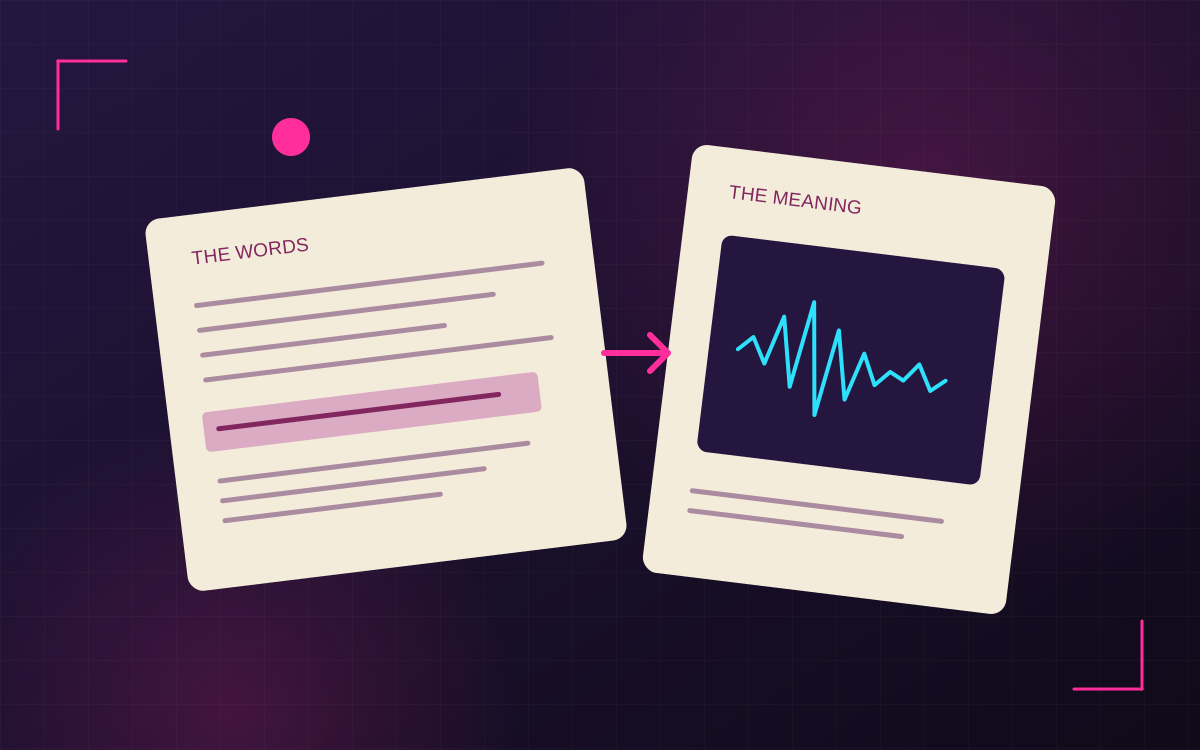
To understand why this matters, it helps to see how search has evolved. What Google and AI do with your business information has gone through three very distinct phases, and most businesses are still playing by Phase 1 rules while the game has moved on entirely.

1
Traditional SEO

Strings

Use the right words, rank for those words. Success was getting a page to the top of Google for a phrase. The website was the whole ballgame.

2
Modern Search

Things

Search started understanding real-world concepts: your brand, your products, your people, as distinct "things" worth knowing about, not just words to match.

3
AI Search. Now

Systems

AI doesn't just find information, it reasons about it. The goal has shifted from "rank for a term" to "be the trusted authority on a topic." Entirely different game.

Here's what Phase 3 means in practice. When you ask an AI a question, it doesn't just pull up a website, it reasons about which brands it has enough confidence in to put its own credibility behind. It's not a search. It's a recommendation. And recommendations require trust, not just relevance.

This is what makes AI search optimization fundamentally different from traditional SEO. You're not optimizing a page for a keyword match. You're building a brand identity that a reasoning system can verify, trust, and stake its reputation on when it recommends you to a user. The technical term for this discipline is Generative Engine Optimization (GEO), and understanding the difference between GEO, traditional SEO, and Answer Engine Optimization (AEO) is the first strategic decision every business needs to make in 2026. ROI.LIVE's complete comparison of GEO vs. SEO vs. AEO breaks down how these three disciplines differ, where their signals overlap, and which layer to prioritize based on your current situation.

The stakes are significant. Nearly 60% of all Google searches now end without a single click, users get their answer directly from an AI Overview and never visit a website. Google's AI Overviews and traditional organic rankings are now two completely separate competitions. You can rank #1 on Google and still be invisible to the AI answer sitting above it. That's the new reality every business is operating in.

Why AI Skips Some Brands and Recommends Others

Here's the mental model that changed how I think about all of this. Every AI system has what you might call a trust budget: a finite amount of effort it's willing to spend trying to figure out who you are before it moves on. Think of it like a busy analyst who has 30 seconds to decide whether to include your brand in a report. If your information is clear, consistent, and easy to confirm, you make the cut. If it's scattered, contradictory, or vague, they skip you and move to the next option.

Now multiply that by millions of queries per day. AI systems are making these trust calculations constantly, at scale. The businesses that win are the ones that make their case easy to verify. The ones that lose are the ones forcing the AI to do extra work, cross-referencing contradictory information, making assumptions, or giving up entirely.

⚠ The Silent Revenue Leak: Brand Inconsistency

When your website describes your business one way, your Google listing says something slightly different, and your LinkedIn profile tells a third story. AI sees a red flag. It lowers its confidence in your brand and reduces how often it recommends you. ROI.LIVE calls this Brand Drift, and it's the most common problem the ROI.LIVE team uncovers when auditing clients. The frustrating part: everything looks fine from the outside.

The flip side of this is equally powerful. When your business information is organized, accurate, and consistent everywhere AI looks, your website, your Google listing, your LinkedIn, industry directories, and trusted third-party sources, you're essentially handing the AI a perfectly packaged dossier. Instead of doing investigative work, it's doing a quick confirmation. Your trust score goes up. Your chances of being recommended go up with it.

One thing that surprises most business owners: brand mentions now matter more than backlinks for AI citation eligibility. Traditional SEO was built around links. AI search is built around recognition, how many trusted sources already know your name and describe you consistently. That's a significant budget reallocation signal for any business serious about AI visibility.

📊 The Business Case

Businesses that invest in building proper AI trust infrastructure see up to a 40% increase in organic traffic and up to 300% improvement in how accurately AI represents their brand in answers. When AI describes you correctly and confidently, it recommends you more, and your customers show up already trusting you.

Your Brand Is More Than a Website. It's a Identity

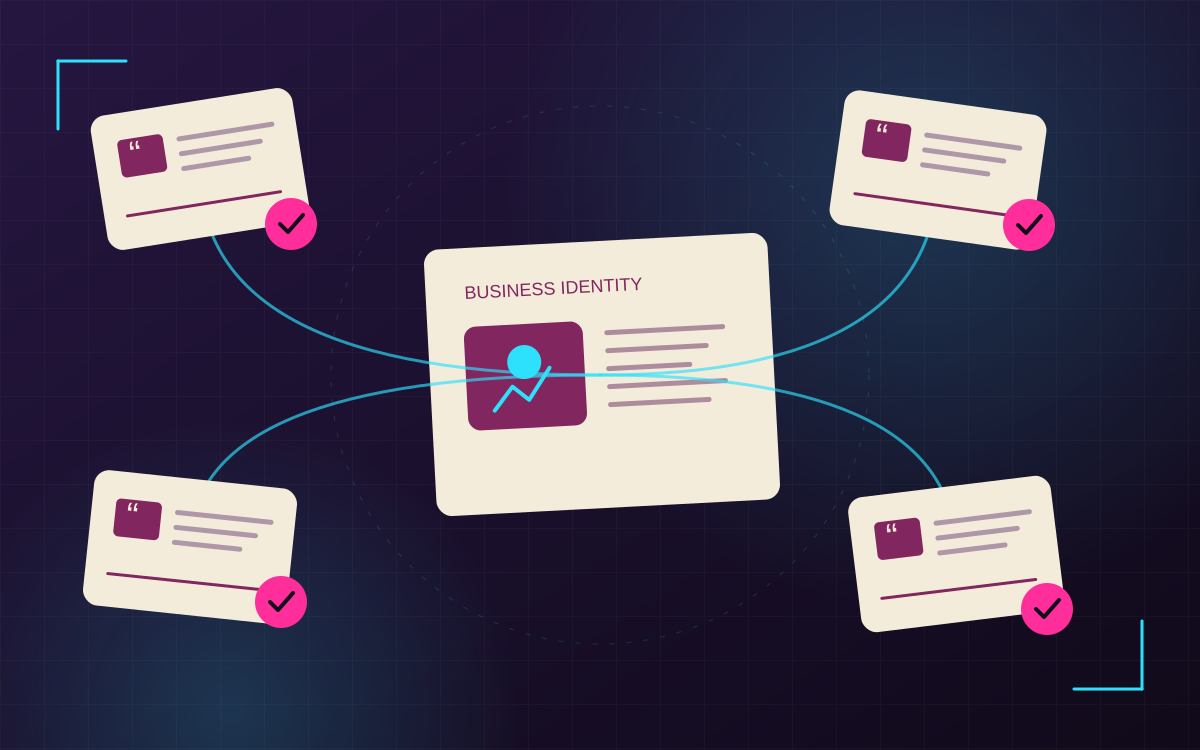
Here's a concept that sounds technical but is actually straightforward once you see it. In AI, every real-world thing, a business, a product, a person, a place, is treated as an entity: a distinct identity that can be described, verified, and connected to other things. Think of it like a digital personnel file for your brand. The richer and more consistent that file is, the more credibility AI gives your brand when deciding who to recommend.

Most businesses think of their online presence as a collection of separate things: a website, a Google listing, a LinkedIn page, maybe some press mentions. In the AI era, those aren't separate, they're all pieces of the same identity. And when those pieces tell the same story, AI treats you as a trustworthy, well-known authority. When they contradict each other, you look like a brand AI doesn't know well enough to vouch for.

Building that identity the right way comes down to three things:

  • One consistent story everywhere, your website, Google listing, LinkedIn, industry directories, and any press coverage all need to agree on who you are, what you do, where you're located, and how to reach you. No variations, no outdated info sitting on a directory you forgot about.
  • Clear connections between all the parts of your business. AI doesn't just want to know you exist. It wants to understand how your services relate to each other, how your team connects to your brand, how your customer reviews connect to your products. The more clearly those relationships are declared, the more confidently AI can describe you.
  • Confirmation from sources AI already trusts, when credible third parties, industry publications, Wikipedia, established directories, are talking about your brand and saying the same things your own website says, AI's confidence in you multiplies. It's the digital equivalent of a warm introduction from a mutual contact who both parties already respect.

The businesses with the highest AI trust scores have all three of these working together. They've essentially built a profile so complete and consistent that AI doesn't have to guess anything about them, it just confirms what it already knows.

JS
Written by
Jason Spencer →
Founder & Fractional CMO · ROI.LIVE · Asheville, NC · 18+ years in digital growth
class="cta-banner reveal">

Not Sure Where Your Brand Stands With AI?

ROI.LIVE runs a full AI Visibility Audit: finding every inconsistency, gap, and missed opportunity before your competitors find them first.

GET YOUR AUDIT →

5 Steps to Optimize for AI Search. A Framework Built for Business Owners

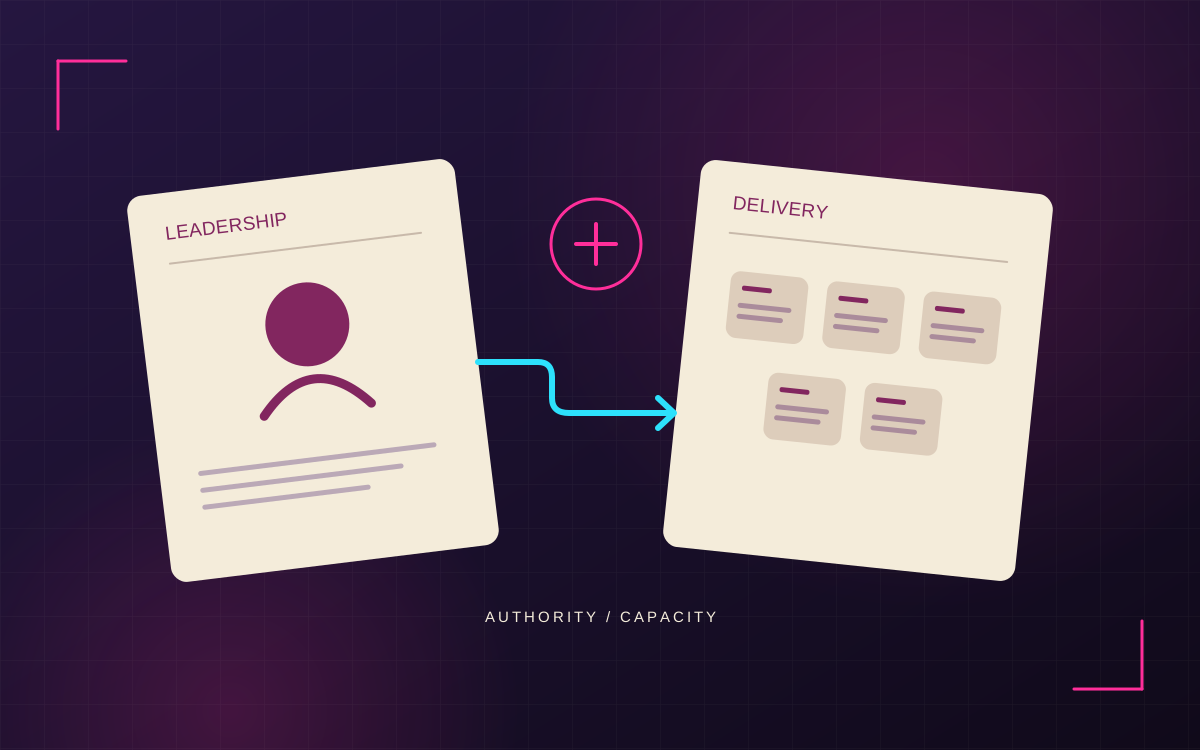
This isn't a technical checklist for your IT team. It's a strategic framework your leadership team should understand and sponsor, because the decisions that drive AI visibility happen at the brand level, not the website level.

1

Get Your Story Straight: Everywhere

Before anything else, audit what AI actually finds when it researches your brand. Your website, your Google Business listing, your LinkedIn company page, your Yelp or industry directory profiles, do they all say the same things? Same business name format, same address, same founding year, same description of what you do?

Every inconsistency is a trust penalty. Not a minor one. AI systems treat contradictions the way a bank treats a loan applicant who lists three different home addresses on their application, it raises a flag, lowers confidence, and reduces how often you get recommended. This step isn't glamorous, but it's the foundation everything else rests on.

⚠ Most Overlooked Step
2

Tell AI Exactly What Kind of Business You Are: With Structured Data

AI systems speak a standardized language for categorizing businesses and content called structured data, and understanding what structured data actually is doesn't require a technical background. Think of it like industry classification codes, except there are over 800 of them, and most businesses are using the equivalent of "miscellaneous." The more precisely you describe your business, the more confidently AI slots you into the right category and recommends you for the right queries.

This specificity cascades through everything: your services, your content, your team pages, your customer reviews. One of the most overlooked tools here is a properly structured FAQ page. FAQ content is heavily cited by AI systems because it directly mirrors how people ask conversational questions. When every piece of your content is correctly labeled and connected, AI builds a detailed, accurate picture of who you are and what you're best at. That picture is what gets recommended.

800+ Categories Available
3

Connect the Dots Across Your Entire Brand

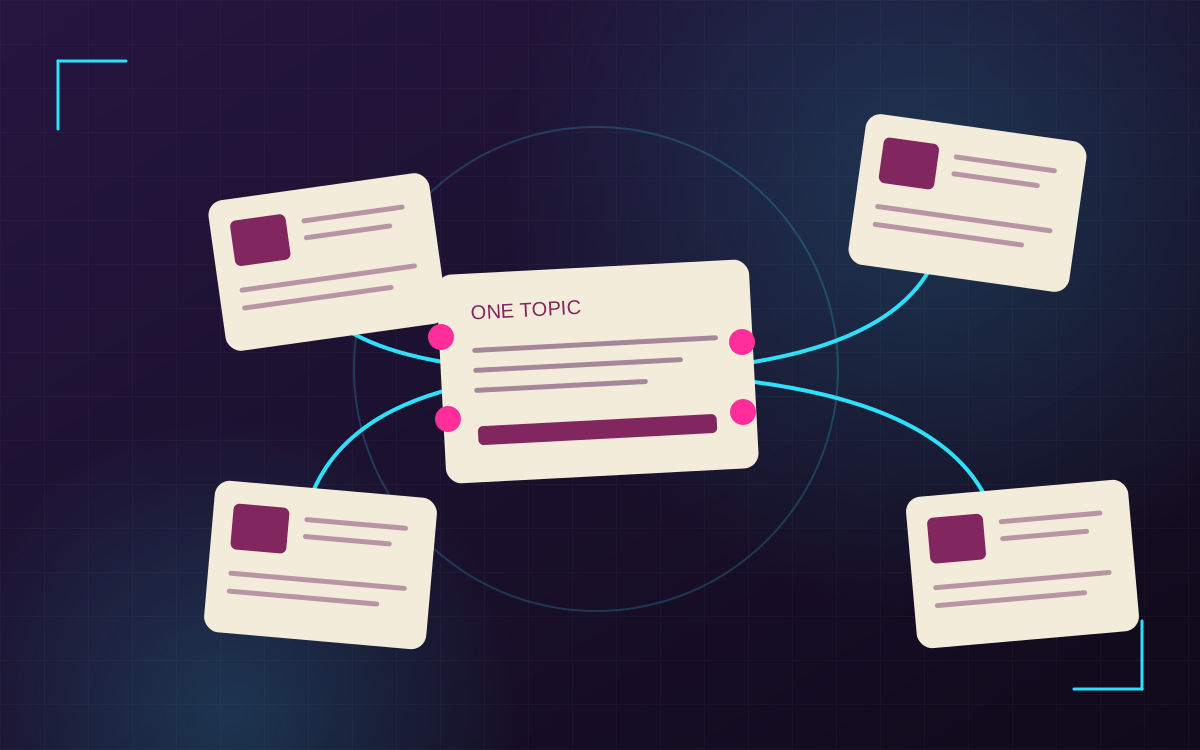
One of the most common mistakes ROI.LIVE sees: businesses that have invested in their online presence but treated every piece as a standalone asset. Your website. Your reviews. Your service pages. Your team bios. In isolation, each of these is just a data point. Connected together in the right way, they tell a complete, credible story that AI can confidently verify and repeat.

Think of it like a great employee file versus a pile of loose papers. The file has everything organized: experience linked to the employer, reviews linked to specific projects, credentials linked to the person who holds them. AI reads your brand the same way. The better organized and connected your information is, the more of an authority you look like.

Foundation Layer
4

Build Third-Party Credibility. The Trust Multiplier

Your own website saying you’re great is nice. Trusted third parties saying the same things is what moves the needle with AI. When credible external sources. Wikipedia, Wikidata, established industry directories, respected media outlets, LinkedIn, all confirm the same facts about your brand, AI’s confidence in you multiplies quickly.

This is the heart of a properly executed earned media strategy, and it’s why PR and digital press are now directly connected to search visibility in a way they never were before. Every time a trusted source covers your brand and confirms what you do, your recommendation likelihood increases. It’s also why building topical authority, being the most thorough resource on your topic, compounds your AI visibility faster than any other single investment. AI systems favor sources that don’t just know one answer, but demonstrate depth across the entire subject.

Highest use Step
5

Treat This Like Business Infrastructure, Not a One-Time Project

Here’s where most businesses undermine themselves. They invest in getting everything right: then six months later, prices have changed, team members have moved on, a new service has launched, and no one updated the digital record. AI detects that gap between what your brand says online and what’s actually true, and it flags you as unreliable. There’s also a little-known 90-day freshness cliff, research consistently shows AI citation rates drop sharply for content older than three months. This isn’t just a publishing cadence issue. It’s an infrastructure governance issue.

On the technical side, there are two hygiene items that most businesses have never heard of but that directly control whether AI can even access your brand. First, make sure your website’s robots.txt file isn’t accidentally blocking AI crawlers, many sites do this without realizing it, and if AI can’t crawl you, AI can’t cite you. Second, a new file format called llms.txt is emerging as a way to tell AI systems exactly how to read and understand your site structure. It’s still early, but the first-mover advantage here is real. And don’t overlook your Google Business Profile, in 2026, it’s no longer just a local SEO tool. The website investment required to support this local SEO and entity architecture is a direct business decision. It’s one of the primary entity signals AI systems use to verify your brand identity. Finally, site speed directly affects AI citation likelihood, content that loads faster is measurably more likely to be included in AI-generated answers. All of this assumes your underlying website is built correctly in the first place — the 24-month ROI math on small business website decisions makes a compelling case for why cutting corners on your site foundation costs far more than you save.

Consistency = Compounding Trust

AI Search Optimization Metrics: Stop Measuring the Wrong Things

If your marketing reports still lead with keyword rankings and website traffic, you're navigating with an outdated map. Those metrics were designed for a world where the path from search to your brand ran through a results page. That path has been rerouted. AI now sits in the middle, and to know whether you're winning there, you need different instruments. ROI.LIVE has built a new dashboard framework specifically around these AI-era KPIs, and the contrast with legacy SEO reporting is significant.

New Primary KPI

How often does your brand appear when someone asks an AI assistant a question in your category? This is the new share of voice, and it's more valuable than a #1 ranking, because AI recommendations come pre-loaded with trust. Even if no one clicks, they've heard your name from a source they trust.

Trust Signal

How often do AI systems cite your brand as a source? Citation share is replacing rankings as the primary measure of digital authority, it rises when trusted external sources consistently validate your brand and your information is clean across every platform AI checks.

Accuracy Metric
Brand Accuracy Score

When AI describes your business, does it get it right? Services, pricing range, location, specializations, the closer AI's description matches reality, the more your prospects arrive already informed and pre-sold. Test this yourself today by asking ChatGPT and Perplexity to describe your business, the gap you find is your starting point.

Traffic Quality

Visitors arriving from AI platforms convert at measurably higher rates than typical search traffic, they arrive pre-qualified, having already received a recommendation. Track this in Google Analytics 4 by monitoring sessions from chatgpt.com, perplexity.ai, and similar sources as a separate channel.

What's Coming Next: And Why It's Bigger Than Search

Everything covered in this guide so far, building a consistent brand identity, organizing your information, earning third-party credibility, that's how you win in AI search today. What's coming in the next 12 to 24 months is a bigger shift still. ROI.LIVE calls this the agentic web, and the implications for every business that sells a service or product are profound.

Right now, AI answers questions. Soon, AI will complete transactions. Tools like OpenAI's Operator and Google's Agentic Mode are being built to take action on a user's behalf, book the appointment, place the order, compare the options and pick the winner. The user says "schedule a consultation with a financial advisor near me" and the AI handles the rest, end to end.

For your business to be included in that future, you need to be more than findable. You need to be practical, your services, pricing, availability, and booking process all need to be structured in a way AI can read and act on without human intervention. The technical term is "schema actions," and they work like a menu of capabilities you publish to the AI landscape:

🛒
Buy Action
E-commerce & retail purchases
📅
Reserve Action
Restaurants, hotels & events
🗓
Schedule Action
Services, consults & appointments
📦
Order Action
Delivery & fulfillment
💳
Subscribe Action
SaaS, memberships & recurring

If an AI agent is ready to book your service for a customer and can't find your pricing, your availability, or how to initiate the transaction, it doesn't wait. It moves to a competitor who has that information organized and accessible. This isn't a visibility problem at that point. It's a revenue exclusion problem. And the brands investing in this infrastructure now will have a real head start when the wave arrives.

💡 The First-Mover Opportunity

Most businesses won't take this seriously for another 18 months, until they start noticing competitors being recommended and booked by AI while they're getting skipped. The businesses building this foundation today are creating a compounding advantage that will be very difficult to close later. The cost of being early is small. The cost of being late is significant.

Protecting What You Build: The Four Pillars of AI Visibility Governance

Here's the part most businesses skip: and where most of the long-term value either compounds or erodes. Getting your AI trust infrastructure right once is great. Keeping it right as your business evolves is what separates the brands that hold their AI visibility from the ones who win it and quietly lose it again six months later.

Content strategy plays a role here too. Not all content is created equal in the eyes of AI systems. Long-form content consistently earns more AI citations than short-form, but only when it's structured for machine readability, not just word count. And the way you write for AI citation is different from traditional SEO copywriting: direct answers first, evidence second, clear entity attribution throughout. The brands winning in AI search have shifted their entire content philosophy away from traffic generation and toward brand fame, awareness, credibility, and recognition that compounds regardless of whether anyone clicks.

Someone Owns It

Assign clear ownership for keeping your brand's digital identity current. When no one is responsible, no one updates it, and AI notices the decay faster than you do.

Updates Happen Automatically

When a price changes on your website, your broader digital identity should update with it. The goal is a system where human updates trigger automatic consistency: not a separate to-do list that gets forgotten.

Errors Get Caught Early

Build in a monitoring process that flags inconsistencies before they become trust penalties. An error that AI detects before you do is already costing you recommendations.

Changes Reach AI Fast

When you update something meaningful: new service, new location, new team member, that update needs to reach AI systems quickly, not sit in a queue waiting to be crawled weeks later. Real-time matters.

Jason Spencer's Take: What Every Business Owner Should Do This Week

Jason Spencer, founder of ROI.LIVE, has been building digital growth strategies for ambitious businesses since 2008. He's watched SEO evolve through every major shift, and seen which businesses came out ahead each time. It wasn't always the biggest ones or the ones with the best products. It was the ones that understood what was changing and moved before their competitors did.

This shift is different from the ones before it. Those were about optimizing within the existing game. This one is about a new game entirely. The brands investing in AI trust infrastructure today aren't just improving their search performance, they're building the foundation that will determine whether AI systems recognize them as trusted authorities or pass them over for the next decade.

Consider this: nearly 47% of businesses still have no AI search strategy whatsoever. That's not a threat, that's a window. The businesses that understand this now and make the transition from traditional SEO to AI search optimization while that window is open will hold a structural advantage that's genuinely difficult to close once it compounds. The technical execution is ROI.LIVE's job. The strategic decision to prioritize it is yours.

The brands being recommended by AI tomorrow are the ones doing AI search optimization today. Not through ads. Not through content volume. Through trust, structured, verifiable, consistent trust that compounds over time.

Jason Spencer, Founder · ROI.LIVE

Three things you can do right now to see where you stand:

  • Run a quick brand consistency check: this 15-minute audit will show you exactly where your story breaks down across platforms. Your website, Google listing, LinkedIn, and directories all need to agree on the same core facts. Every discrepancy is a trust penalty you're paying every day.
  • Ask an AI about yourself right now, type your company name and what you do into ChatGPT, Perplexity, and Google. What does it say? Is it accurate? Does it recommend you? This self-test takes five minutes and reveals your AI search optimization gap directly. That gap is the cost of inaction, measured in missed recommendations.
  • Talk to someone who actually understands this space, not your website developer, not your social media manager. Jason Spencer and the ROI.LIVE team have been helping businesses navigate exactly this kind of strategic inflection point for nearly two decades. That conversation is usually worth more than months of conventional SEO work.

Frequently Asked Questions About AI Search Optimization

What is AI search optimization and how is it different from SEO? +

AI search optimization is the practice of building your brand's digital identity so that AI-powered platforms: Google AI Overviews, ChatGPT, Perplexity, and others, can recognize, trust, and recommend your business. Traditional SEO focused on matching keywords to rank on a results page. AI search optimization focuses on making your brand easy for a reasoning engine to verify and vouch for. The core difference: SEO is about rankings. AI search optimization is about recommendations.

How do I know if my business is being recommended by AI? +

The simplest test: open ChatGPT, Perplexity, and Google and type "[your category] in [your city/region]" or "best [your service type] for [your ideal client]." Note whether your brand appears, what it says, and whether the description is accurate. Also check Google Analytics 4 for referral traffic from chatgpt.com, perplexity.ai, and bing.com (Microsoft Copilot). Gaps in either test reveal where your AI search optimization needs work.

What is Brand Drift and how does it hurt my AI visibility? +

Brand Drift is what happens when your business information is inconsistent across platforms, your website says one thing, your Google listing says another, your LinkedIn profile says a third. AI systems cross-reference all of these sources when forming a picture of your brand. When they find contradictions, they lower your confidence score, which directly reduces how often they recommend you. ROI.LIVE finds Brand Drift on virtually every client site during the initial audit. It's invisible from the outside but measurably harmful to AI visibility.

How long does it take to see results from AI search optimization? +

Some improvements are nearly immediate, fixing Brand Drift and deploying structured data can influence AI citation patterns within weeks. Building deeper topical authority and third-party validation is a 3–6 month compounding process, similar to traditional SEO but more durable once established. The key difference is that AI trust compounds rather than resets: once AI systems recognize your brand as a reliable authority, that recognition tends to reinforce itself across queries and platforms.

Do I still need traditional SEO if I'm doing AI search optimization? +

Yes, but the relationship is different than it used to be. Traditional SEO and AI search optimization are now two separate competitions that share some foundational infrastructure. Strong domain authority, quality content, and clean technical SEO all contribute to AI citation likelihood. But ranking on page one of Google no longer guarantees AI visibility, roughly 60% of AI recommendations go to brands that aren't in the traditional top 10. The answer is to pursue both tracks simultaneously, with a clear understanding of which metrics belong to which channel.

JS

Jason Spencer

Fractional CMO & AI Search Strategist · ROI.LIVE

Jason is the owner and founder of ROI.LIVE, a fractional CMO and performance marketing agency he built from the ground up starting in 2008. With over 18 years of experience helping businesses grow online, he's earned a reputation as the person who makes complex digital strategy actually make sense to the people who have to fund and direct it. His clients are ambitious businesses across the USA, and they share one thing in common: they're done guessing and ready to build something that compounds. He is not the type to send you a ranking report and call it strategy.