HOW TO CHOOSE A MARKETING AGENCY · JASON SPENCER · ASHEVILLE, NC

Choose an agency the way you would hire an operator.

Ten scored questions with the answers you should want, the dodges to expect, three tests that take thirty minutes, and the red flags hiding in the contract. Score any candidate, including me.
No pitch. A real plan, yours either way.
Jason Spencer, founder of ROI.LIVE, in the ROI.LIVE office in Asheville, North Carolina
Every question scored 0 to 2
Jason Spencer
Founder, ROI.LIVE · Asheville, NC
30 yrs building businesses18 yrs digital marketing55+ industries5.4-yr average client retention
01
BEFORE THE SHORTLIST

Decide what kind of help you need, because the titles lie

Most bad hires are the right vendor for the wrong job.
Agency, consultant, fractional CMO, director: the titles overlap on purpose. Four situations cover almost every search, and each one points at a different hire.
Four situations, the hire each one calls for, and the trap inside each
Your situationWhat to hireThe trap
You have a validated plan and need productionAn agencyHiring a strategist for a builder’s job
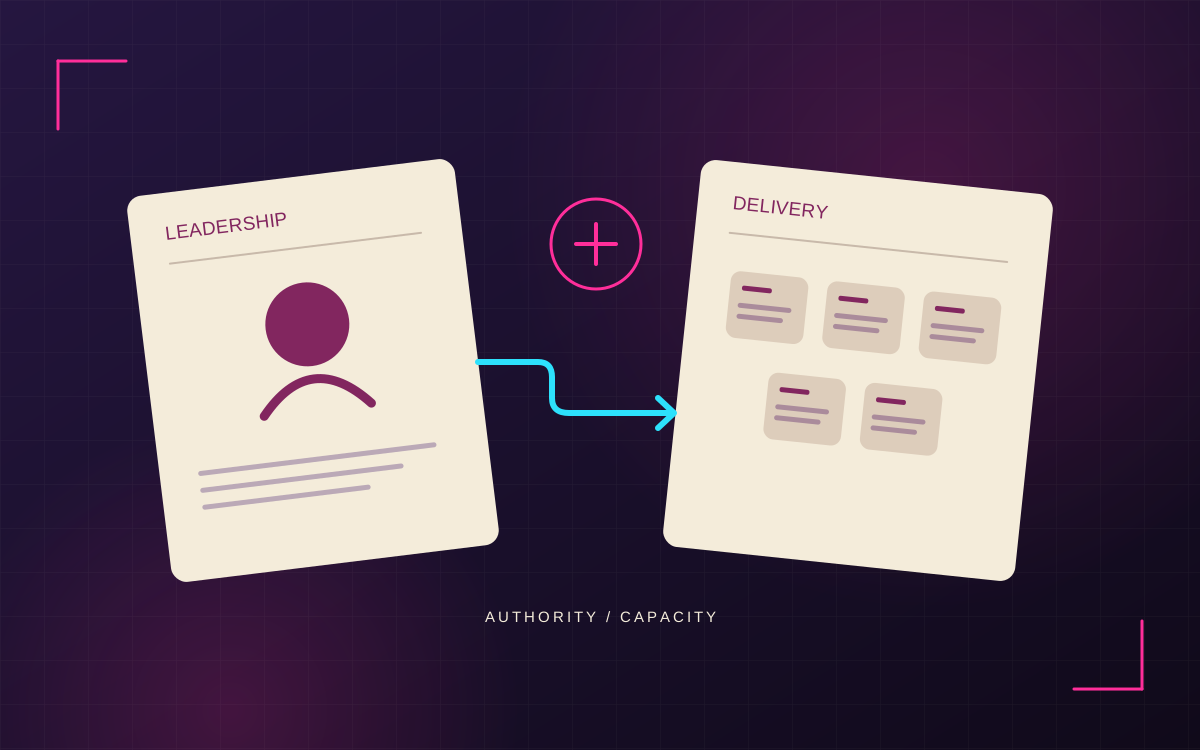
You have marketing activity but no owner of the numberA fractional CMO who executesBuying production for a leadership problem
You know exactly what to do and need handsAn in-house directorOver-hiring seniority you cannot direct
You need a second opinion on the planA consultant, fixed scopeA retainer for a one-answer question

The full five-way comparison with monthly costs is on the fractional CMO page.

02
THE SCORECARD

Ten questions. Two points each. Score every candidate.

Under 11 out of 20 is a walk. Whatever the deck looks like.
16 to 20 A specific number or a name for every answer
11 to 15 Worth a second call, press on the gaps
Under 11 A dodge on something that should be easy
MONEY
01
What does it cost, all in, per month?
The answer you wantA published number or a range on the first call, with ad spend split from fees.
The dodgeIt depends, and then a custom proposal three weeks later with the media hidden inside one line.
02
How do you make money besides my retainer?
The answer you wantNothing. No referral fees, no margins on media or software.
The dodgeWe have partner relationships with a few platforms.
OWNERSHIP
03
Who physically touches my ad account, and what is their name?
The answer you wantA named person with an email you can hold today.
The dodgeA dedicated team of specialists assigned to your account.
04
How many clients do you carry at once?
The answer you wantA cap and a current count, in writing.
The dodgeWe scale the team to demand.
PROOF
05
Show me a named client with a dated number.
The answer you wantA client you can find, a date, and a figure, on a page you can revisit.
The dodgeA 3x improvement for a client in yourspace, name withheld.
06
What does a failed engagement look like in your history?
The answer you wantA real one: what went wrong, what changed.
The dodgeWe have never had one.
EXECUTION
07
What happens in the first 30 days?
The answer you wantYour accounts opened and read, a written plan with owners and dates.
The dodgeDiscovery, onboarding, and a brand workshop.
08
What number will you be measured on?
The answer you wantOne that lands in your bank account, agreed before signing.
The dodgeImpressions, traffic, and engagement, on a dashboard.
EXIT
09
Who owns the accounts and assets on the day we stop?
The answer you wantYou do, named in the contract, in working condition.
The dodgeWe will work that out if it comes to that.
10
What is the minimum term?
The answer you wantA number in writing, and what it takes to leave.
The dodgeA twelve-month commitment described as a partnership.
Score 2 for a specific answer, 1 for a real answer with no number in it, 0 for the dodge. Run it on every candidate, including ROI.LIVE: the answers on this site are published and dated.
03
THREE TESTS

The 30-minute tests, before the contract

References tell you the past. These three tell you the deal.
01

The AI test

Feed their proposal back to ChatGPT with the same brief. If the free output is half as good, you were paying for formatting and a logo.
Catches: slop sold as strategy
02

The old-client test

Ask for a client from 18 months ago, not a hand-picked current fan. Then ask what the engagement looked like when it was not going well.
Catches: cherry-picked proof
03

The ownership test

Ask who owns the ad account and the analytics property, in writing, before signing. If the answer starts with we, keep walking.
Catches: the exit that costs a year
04
THE RED FLAGS

Six red flags hiding in the contract

Five of the six are legal, and still bad.
01

A price with no term

A monthly rate with no stated commitment means the term arrives later, in a renewal conversation you did not plan for.
02

A term with no exit

Twelve months is defensible for compounding channels. Twelve months with a silent auto-renew is a trap with paperwork.
03

Percentages with no names

Case studies that say 3x with no client, no date, and no baseline are unfalsifiable, which is the point of writing them that way.
04

A first month of onboarding

Thirty days of discovery on your dime means they were selling before they read your accounts, and they still have not.
05

Silence on exit ownership

Who keeps the ad account, the domain, the tag container, and the creative files. If the contract does not say you, assume it says them.
06

The familiar proposal

A proposal that reads like the last three you were sent, down to the gradient, was written for the category, and you are not a category.
05
THE STANDARD

What transparency looks like, published on this site

Here is the bar. Hold anyone to it.
ROI.LIVE publishes its retainer bands, $5,000 to $15,000 a month, and the $2,500 fixed-scope diagnostic. The client cap and current count are on the fractional CMO page with a date stamp. Named clients with dated numbers sit on every page of this site, and the function-by-function table of who touches what is published in full. Score this site against the card above; it is built to survive it.
$5,000
Starting retainer, published with the full bands by revenue. Media and software at cost, never marked up.
$2,500
The fixed-scope diagnostic, priced like a product because that is what it is.
07
QUESTIONS

Questions people ask while they are deciding

How much should a small business spend on marketing?

Enough to buy customers at a cost that protects margin, which the percent-of-revenue rules cannot tell you because they cannot see your price point or your repeat rate. Work it backward: what a customer is worth, what a reasonable acquisition cost is at that worth, then budget to that. The first call at ROI.LIVE does this math with your numbers.

What is the difference between a marketing agency and a consultant?

A consultant analyzes and recommends, then leaves the decision and the execution with you. An agency produces the work against a plan. The gap in the middle is ownership: someone who decides the plan and is measured on the result. That role is what a fractional CMO who executes is for.

Should I hire an agency or a fractional CMO?

An agency when you have a validated plan and need production volume. A fractional CMO when you have activity but nobody owning the number. Buying both is the common arrangement and the common failure, because the plan and the execution end up with separate owners. The five-way comparison with costs is on the fractional CMO page.

How long should a marketing contract be?

Long enough for the work to compound, short enough to leave if the scorecard goes flat. Six months is a fair minimum for anything with a compounding channel in it. Be suspicious of a twelve-month commitment described as a partnership, and of a monthly rate with no term stated, because the term is where the real price hides.

What questions should I ask before signing?

The ten on this page, scored. The short version: what it costs all in, how the vendor makes money besides your invoice, who touches the ad account by name, how many clients they carry, a named client with a dated number, a failure they will describe, what the first 30 days produces, what number they accept being measured on, who owns the accounts on exit, and the minimum term in writing.

What are the red flags in an agency contract?

A price with no term, a term with no exit, case studies with percentages and no names, a first month that is all onboarding, and any answer to the account-ownership question that starts with we. Any one of those is worth a second opinion before you sign.

How do I know if my current agency is working?

Score them on this page. The two questions that decide it fastest: what number are they measured on, and can they show you a named client with a dated result. If the monthly report cannot be traced to revenue and nobody will answer the ownership question, you are paying for activity.

How do agencies charge?

Monthly retainers for ongoing work, project fees for defined builds, and percentages of ad spend in some paid arrangements. The model matters less than the disclosure: what is fee, what is media, and what is marked up. ROI.LIVE publishes its retainer bands and bills media and software at cost, and any vendor who will not split those lines is hiding one.

THE NEXT STEP

Bring your numbers.

Run the card on ROI.LIVE. If I dodge, hire someone who did not.
Free 30-minute growth plan call. You keep the plan either way.