ROI.LIVE first noticed the pattern in January 2026. A client's Search Console data showed the paradox that defines zero-click searches: impressions rising steadily, clicks falling. The estate planning law firm had published a cluster of 8 articles about trust administration after Jason Spencer built their content strategy around probate-specific scenarios their competitors glossed over. Google was showing their content to more people than ever. Fewer of those people were clicking through. The initial reaction was alarm. The second reaction, after digging into the data, was the opposite: branded searches for the firm's name had increased 28% over the same period. People weren't clicking the articles. They were reading the AI Overview citation, noting the firm's name, and searching for the firm directly later.

Zero-click searches are queries where the user gets their answer on Google's results page without visiting any website. AI Overviews, featured snippets, knowledge panels, and People Also Ask boxes now satisfy between 60-80% of search queries directly. The percentage varies by query type and research source, but the direction is consistent: more searches end on Google, fewer end on your site.

Synthesized vs Cited: The Distinction Nobody Is Making

The entire industry conversation about zero-click treats it as a single phenomenon: Google answers the question, the user doesn't click, traffic declines. Jason Spencer at ROI.LIVE sees two different things happening, and the distinction changes everything about how you respond.

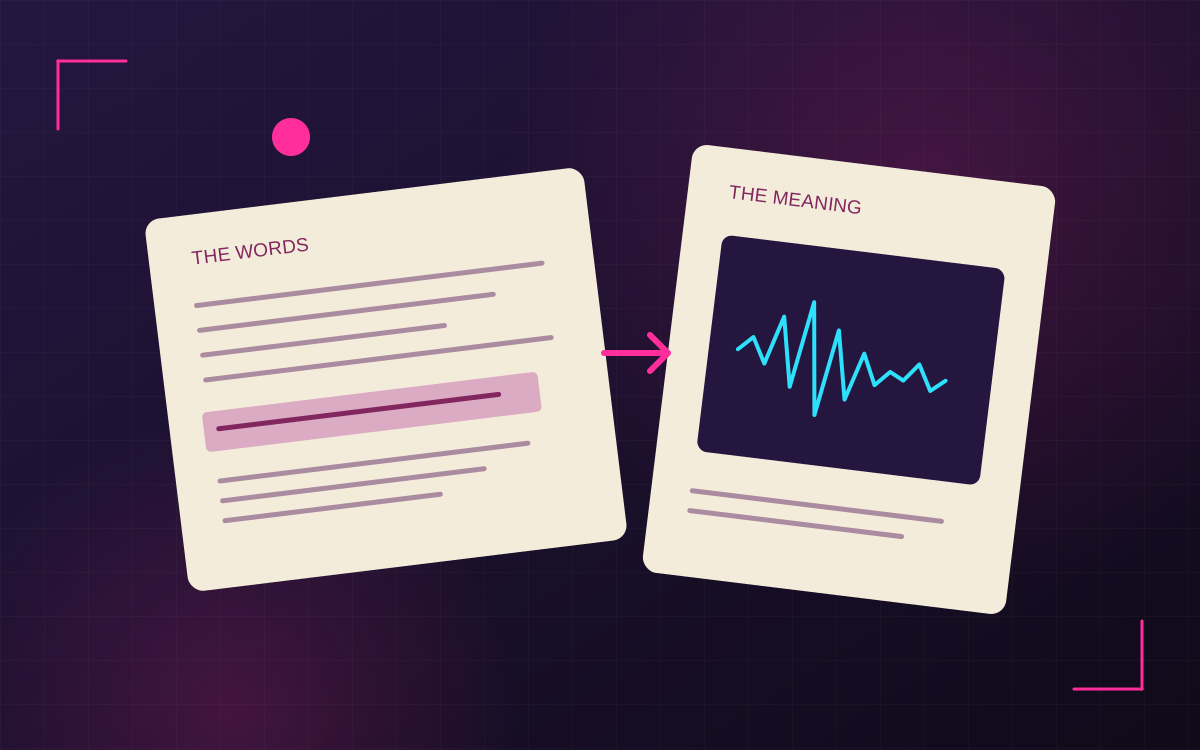
Synthesized means Google's AI Overview absorbed your content's information, combined it with information from other sources, and presented the answer without attributing any specific source. Your knowledge was used. Your brand was invisible. This happens to commodity content. When your article about "what is a living trust" says the same thing as the 15 other articles about living trusts, Google has no reason to name your firm as the source. The information isn't unique to you. It's ambient web knowledge that the AI Overview synthesizes into a generic answer.

Cited means Google's AI Overview attributed specific information to your site. Your brand appeared as a source. The user saw your firm's name attached to a specific data point, framework, or expert perspective. This happens to content with information gain. When your article about trust administration includes a specific tax scenario that other articles don't cover, or names a local probate court timeline that no national legal site has documented, the AI Overview has to cite the source because the information exists nowhere else in the index.

The difference between being synthesized and being cited is the difference between losing traffic and gaining brand visibility. ROI.LIVE's estate planning client was cited, not synthesized. Their branded search increase wasn't a coincidence. It was a direct result of their name appearing repeatedly in AI Overviews as the source for specific trust administration scenarios that nobody else published.

Synthesized (Invisible) Cited (Visible)
Law Firm "A living trust helps avoid probate" (generic, exists on 500 sites) "Buncombe County probate averages 14 months; a revocable trust closes in 6 weeks" (specific, one source)
Medical "Recovery from knee replacement takes 6-12 weeks" (standard timeline) "Our surgeons see full stair-climbing at week 4 in 73% of patients using this protocol" (proprietary data)
Accounting "Home office deductions can reduce your tax burden" (advice on every tax blog) "Our clients miss an average of $4,200 in Section 199A deductions; here's the calculator" (first-party data + tool)

There's a compounding effect Jason Spencer tracks across ROI.LIVE client sites that makes high-IG content more valuable in zero-click environments than most articles about this topic acknowledge. When Google's AI Overview cites a source, ChatGPT and Perplexity tend to cite the same source within days, because all three systems evaluate similar authority signals: entity clarity, topical depth, and content uniqueness. One well-built article doesn't get cited once. It gets cited across multiple AI platforms in a cascade. The estate planning firm's trust administration article was cited in Google's AI Overview in January. By February, the same article was appearing as a source in ChatGPT and Perplexity responses to related queries. That cascade turns a single article into a multi-platform brand presence without any additional work or promotion.

🔗 From the Pillar

Information gain is the mechanism that determines whether your content gets cited or synthesized. The full framework: Information Gain SEO: Why Google Rewards What Only You Can Say

What ROI.LIVE Sees in Client Data

Jason Spencer has tracked the zero-click impact across ROI.LIVE client sites since AI Overviews expanded in late 2024. Three patterns emerge consistently.

First, high information gain pages experience a different traffic curve than low-IG pages. Both see declining click-through rates on the initial query. But high-IG pages see compensating growth in branded search, direct traffic, and referral traffic from AI platforms like ChatGPT and Perplexity that also cite the content. The net traffic impact for high-IG pages is flat to positive. The net impact for low-IG pages is negative and accelerating.

Second, the traffic from AI-platform citations converts at a higher rate than traditional organic traffic. When someone arrives at a law firm's website because an AI system recommended that specific firm as a source on trust administration, they arrive with context. They already know the firm has expertise in this area. They already read a preview of the firm's perspective. The visit is warmer than a cold Google click. ROI.LIVE tracks this across client analytics and the conversion rate difference is consistent: 15-25% higher than standard organic sessions.

Third, the impact is asymmetric by query type. Informational queries ("what is a living trust") are dominated by zero-click. Commercial queries ("estate planning attorney Asheville") still generate clicks because the user's intent requires visiting a website to take action. Original content that bridges informational and commercial intent, like an article about trust administration that names specific tax thresholds and links to the firm's consultation page, survives zero-click better than content that sits purely in one category.

What to Build When Clicks Are Disappearing

The default response to zero-click is to optimize for featured snippets: write 40-60 word answers, use question-based headings, add FAQ schema. That advice is not wrong, but it's incomplete. It tells you how to appear in zero-click results without addressing whether appearing there helps your business.

Jason Spencer's approach at ROI.LIVE focuses on three content types that survive zero-click because they require attribution, demand deeper engagement, or serve intent that can't be satisfied on the SERP.

Content That Requires Attribution

When your article contains a named framework, a specific data point from your business, or an expert opinion that contradicts the default advice, AI systems have to cite you. They can't synthesize "The Delta Audit" into a generic answer because the concept belongs to ROI.LIVE. They can't paraphrase a specific tax threshold that only one law firm has documented without naming the source. Building content with elements that force attribution is the most direct defense against synthesis. An accounting firm that publishes the standard "10 tax deductions for small businesses" gets synthesized. An accounting firm that publishes "the 3 deductions our clients miss most, with the average dollar amount recovered when we catch them" gets cited, because the data is proprietary.

Content That Goes Deeper Than the Overview

AI Overviews provide a compressed answer. If your content has layers of depth beyond what the overview can capture, the overview becomes a teaser rather than a replacement. A medical practice that publishes a generic article about knee replacement recovery gets fully summarized in the AI Overview. A medical practice that publishes a week-by-week recovery timeline with specific exercise progressions, pain management milestones, and the surgeon's own observations from 400+ procedures creates content the overview can only partially convey. The user who wants the full detail clicks through. The overview satisfied the casual browser; the depth retains the serious researcher.

Content Serving Commercial Intent

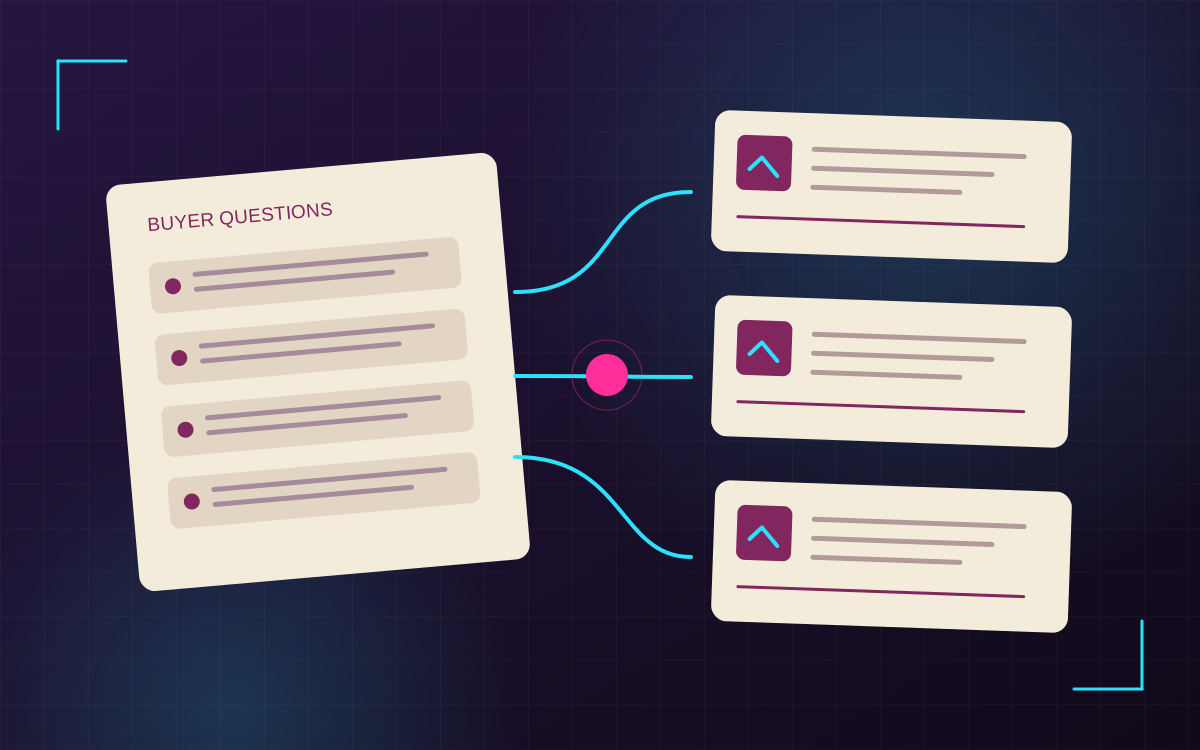
Users searching "best estate planning attorney near me" or "how much does a website cost" need to visit a site to take action. These queries are less susceptible to zero-click. ROI.LIVE builds clusters where informational articles (which may be zero-clicked) link to commercial pages (which still generate visits). The informational content builds the topical authority and gets the AI citation. The commercial content captures the conversion. The cluster works as a system even when individual pages see declining clicks.

Is Your Content Getting Cited or Synthesized?

ROI.LIVE audits your content for citation readiness: information gain, entity clarity, and AEO formatting that makes your brand visible in AI Overviews.

GET YOUR CITATION AUDIT →

If You're Being Synthesized, Here's the Fix

The content that's being synthesized today is the same content that scored zero in a Delta Audit. The fix isn't optimizing formatting for featured snippets. The fix is rebuilding the content with source material that forces attribution. Run The Delta Audit against your top 20 pages by impressions. The pages scoring zero on information gain are the pages being synthesized in AI Overviews. Enrich them with the brand knowledge, first-party data, and expert perspective that make the content unciteable without naming you.

The formatting matters too, but for a different reason than most guides explain. Definition blocks, quick-answer paragraphs, and structured data tables aren't just "snippet optimization." They're containers that AI systems use to identify citable units. When your article has a clean definition block at the top with specific numbers and a named source, the AI Overview can extract that block and attribute it. When your article buries the same information in the middle of an 800-word paragraph, the AI system synthesizes the idea without attribution because it can't cleanly extract and cite a specific passage. ROI.LIVE structures every article with AEO formatting for this reason: the content must be both original enough to require citation and structured enough for AI systems to cite it cleanly.

How to Measure Success When Clicks Decline

If your reporting dashboard only tracks organic sessions and click-through rate, every month will look like a failure in 2026. Jason Spencer redesigned ROI.LIVE's reporting framework to capture the full picture of zero-click value.

Track branded search volume alongside organic traffic. When impressions rise and clicks fall but branded searches grow, your content is being cited and building awareness that converts through a different path. Track this weekly, not monthly, because the branded search lift often appears within 3-5 days of an AI Overview citation. The March 2026 update made this pattern more pronounced as AI Overviews expanded to more query types.

Track AI platform referral traffic separately. Google Analytics shows referrals from chat.openai.com, perplexity.ai, and other AI platforms. This traffic didn't exist at meaningful volume before late 2025. For ROI.LIVE clients with high-IG content, it now represents 8-15% of total referral traffic, and it's growing monthly. The conversion rate on this traffic is higher than organic search because the user arrives with the AI system's implicit recommendation.

Track impression-to-conversion paths. Generative engine optimization creates conversion paths that don't start with a click: impression in AI Overview → branded search → direct visit → conversion. That multi-touch path is invisible in last-click attribution. ROI.LIVE builds reporting that connects the impression event to the downstream conversion through branded search correlation, giving clients visibility into the value of zero-click impressions.

Questions About Zero-Click Searches

What are zero-click searches? +

Zero-click searches are queries where the user gets their answer on Google's results page without clicking through to any website, through AI Overviews, featured snippets, knowledge panels, and People Also Ask boxes. Between 60-80% of searches now end without a click. Jason Spencer at ROI.LIVE views zero-click as a distribution mechanism for content with genuine information gain, not a threat.

How do zero-click searches affect SEO? +

Zero-click eliminates traffic from commodity informational content. Generic content gets synthesized without attribution. Content with original data, named frameworks, and specific expertise gets cited with attribution, driving branded search and brand authority. ROI.LIVE builds content designed to be cited rather than synthesized.

Can you still get traffic from zero-click keywords? +

Yes. Content cited in AI Overviews drives branded search traffic in the days following the citation. Content with depth beyond what the overview can summarize motivates click-throughs from readers who want the full detail. Jason Spencer at ROI.LIVE has observed that high-IG pages see lower initial CTR but higher branded search volume, often netting positive total traffic.

What content is most affected by zero-click? +

Generic definitions, basic process descriptions, and standard advice. These are easiest for AI to synthesize without citing a source. Content built on original research, proprietary data, and expert experience is least affected because AI systems attribute the source when the knowledge is unique.

Related Intelligence

Continue Reading