Website design that helps buyers choose you.
$145,951 in August 2025 → $284,655 in August 2026
What does the website need to do?
Convert the visitor. Feed the engines.
Make the decision easier
Answer the question that brought someone here. Put relevant work, practical details and a clear next step beside the answer.
For an existing Shopify store that needs recurring maintenance rather than a new build, review ongoing Shopify store management.
Make useful pages accessible
Connect related pages with working links and give search engines a consistent description of the business. Inclusion in search or AI answers remains the engine's decision.
Paid clicks need a page that keeps the promise.
A better landing page can improve the share of visitors who enquire. That can lower acquisition cost without changing the auction's click price. Measure the change before taking credit for it.
What does the evidence show?
August 2026: $284,655 in booked contract value across eight signed projects recorded under Google organic search, Google Business Profile and AI Search. Contract value is before project costs. Read the dated case.
The comparison below shows a change in layout, hierarchy and proof placement. We are not presenting an unmeasured conversion lift.
Website design + development / Featured work
Three websites.
Built around the buyer.
A beauty studio with two locations.
Designed to earn
the next appointment.
A calm studio aesthetic. Service pages built around local searches. Clear choices for people who need advice and people ready to book.
Explore seven real before-and-after comparisons, from the homepage to the recommendation form.
Explore Eastside’s redesign See the search and conversion architecture ↗

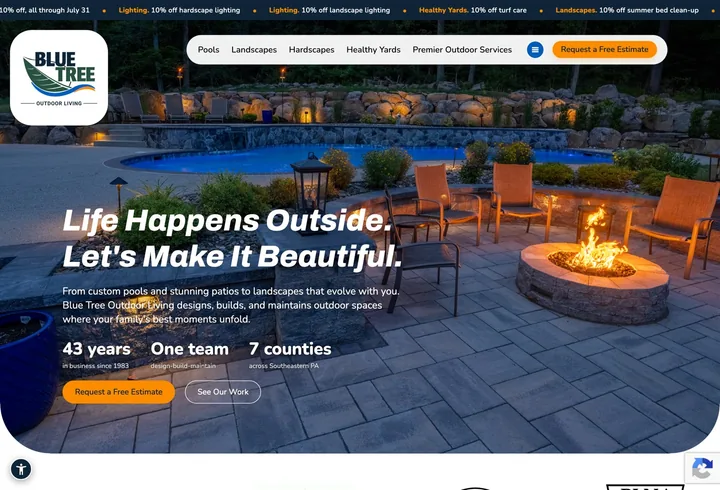
02 / HOME-SERVICE WEBSITE DESIGN
Blue Tree Outdoor Living
Project photography, buyer education and routes to an estimate. Website launched June 10, 2026.
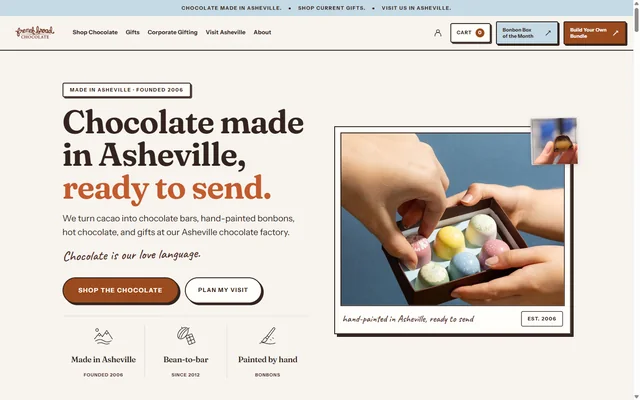
03 / ECOMMERCE WEBSITE DESIGN
French Broad Chocolates
Shopping, gifting and discovery for an Asheville chocolate maker. New storefront in preview.
Same brand. Different decade.
Illustrative hierarchy diagram, not screenshots of The RFP Success Company or evidence of a measured conversion lift.
Six rules. Every page answers to them.
People scan. Every page leads with the answer in large type, and the detail sits behind a click for the reader who wants it.
The words are written so a buyer gets the answer and an engine can lift it. No filler paragraphs written to look busy.
The enquiry journey must work well on a phone. Tap targets, load speed, and forms are built for a thumb before a mouse.
Real photos, real numbers, a named human. The engines and the buyers both look for the same thing: evidence you are who the page says you are.
Every page ends somewhere. A call, a form, a booking. Pages that end in nothing are where the money stops.
Your business controls its domain and accounts. The agreement defines custom work, any third-party licenses and the files and documentation included in the handover.
When I say algorithms, I mean more than Google.
Coverage comes from the data, not from a hunch.
The approved map sets the launch scope. It names every URL, its purpose, the evidence it needs and the pages it links to. Later additions follow buyer demand and available evidence. Page count alone is not a quality target.
What happens before, during and after the build?
1. Diagnose and record the baseline
Review the site, analytics and sales records. Save existing URLs and a comparable period of enquiries, sales and costs before making changes.
2. Approve the map and scope
Agree the pages, integrations, responsibilities, review rounds, migration tasks and launch date. Separate launch requirements from later work.
3. Build and review
Write and design on staging. Your team approves the content. Test forms, calls, navigation, accessibility and layouts on desktop and mobile.
4. Launch and follow through
Apply the redirect map, check the live routes and tracking, then compare the results with the baseline. Record changes and investigate differences before claiming a lift.
What happens to my current site?
We inventory its URLs, traffic and links before deciding what to keep, merge or replace. Relevant old URLs redirect to the closest useful replacement, and we check for broken links, redirect chains and indexing changes after launch. A careful migration reduces risk; no migration can guarantee unchanged rankings or transfer every signal. Your domain, hosting and business accounts stay under your control.
What is included in the price?
Free introduction
Review the business, available evidence and possible next steps. Bring a summary of the numbers; the call is separate from a written diagnostic or a website project.
Book the free call$2,500 Growth Constraint Snapshot
Examine the likely constraint, supporting numbers and a proposed sequence of work. Scope, payment and delivery terms are confirmed before purchase.
Discuss the SnapshotQuoted after scope
Page count, integrations, migration and review rounds determine the project quote. The proposal states any work included in an ongoing engagement.
From $5,000 a month
The agreement defines leadership, specialist work, capacity, separate costs and the term. A retainer does not include unlimited website production.
Read the ongoing service pricingI will tell you on the first call, not after the first invoice.
This sounds like you
- You spend on ads or search and cannot say what a lead costs you.
- Your site is three or more years old and looks it next to competitors.
- You sell several services or serve several towns, and the site covers one page.
- You want the person who sets the strategy to own the build.
- You can name the number that matters: appointments, jobs, orders.
This sounds like you
- You want the cheapest theme that will load.
- You need a one-page brochure by Friday.
- You are pre-revenue and need customers before a website.
- You enjoy running the build yourself and want an extra pair of hands.
- You want a site that says one thing and a business that does another.
Questions owners ask before they book.
How much does a website build cost?
ROI.LIVE quotes a website project after agreeing the page map, integrations, migration work and review rounds. We do not publish one standalone build price. Free introduction is free; the separate written Growth Constraint Snapshot is $2,500. Ongoing engagements start at $5,000 a month. The proposal states which work each fee covers.
How long does a website build take?
Your schedule is based on the scope, content, integrations and review time. We agree milestones before the build starts.
Who writes and approves the pages?
ROI.LIVE writes from your service details, customer questions and evidence. Your team reviews each page on staging before publication. A style approval does not replace factual or publication approval.
Will a rebuild preserve our search traffic?
We inventory current URLs, plan relevant redirects and test the live migration. Those checks reduce avoidable losses, but rankings and traffic can still change. We monitor the result rather than promise zero loss.
Can you guarantee placement in AI answers?
No. We make useful pages accessible and keep business information and supported structured data accurate. Each search engine decides what to retrieve or cite. We measure the questions and responses observed.
Who owns the finished site?
The agreement identifies ownership of the domain, accounts, custom work and any third-party licenses. Your business controls its domain and business accounts, and the handover includes the agreed files and documentation.